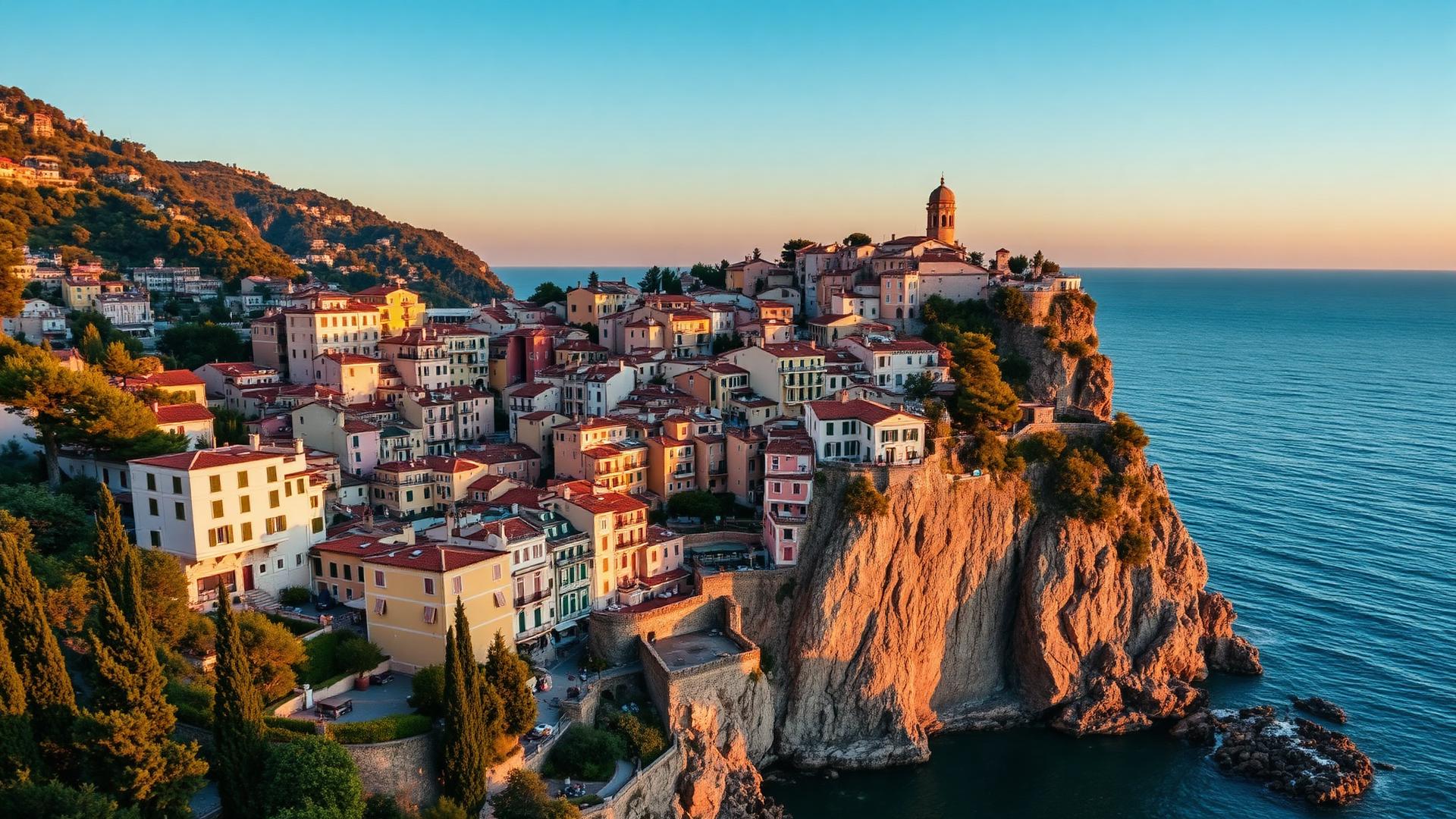
Find secret beaches, islands, ancient sites and the best local tables nearby.
Italy packs 20 regions, more than 300 days of Mediterranean sunshine and 2,700 years of history into a country you can cross by high-speed train in a morning. Rome is the capital; Milan the business and design capital; and the peninsula runs from the Alps and the Dolomites through Tuscany's wine hills and Umbrian villages to the volcanoes, coastlines and archaeological sites of the south and the two great islands of Sicily and Sardinia.
This is a local-first guide to all of Italy: the Colosseum and Vatican in Rome, Florence's Duomo and Uffizi, Venice's canals, Milan's Duomo and Navigli, the Amalfi Coast, Cinque Terre, Lake Como, the Dolomites, Pompeii, the trulli of Alberobello, Matera's sassi, Taormina and Agrigento's Greek temples — organised by region and by the season you're travelling. Every recommendation is paired with the best local tables nearby, bookable on Woltaro with a small refundable deposit that comes straight back to your card when you sit down to eat.
Last updated by the Woltaro editors. Country facts sourced from ISTAT and UNESCO.
Restaurant Directory
Best restaurants in Italy
Choose a city above to see restaurants, or pick All Italy to browse every listing.
Choose a cityto see restaurants there
Google Maps credentials are not configured.
Select a city to see restaurants
Pick a destination above, or choose All Italy to browse every listing.
The 1st-century AD amphitheatre and the political heart of Ancient Rome — two millennia of history in a single unforgettable walk.
Eat Nearby
Roscioli
Roman Classics & Salumi
Armando al Pantheon
Cacio e Pepe Institution
Rome & Lazio
Vatican & St. Peter's Basilica
Vatican City, Rome
Michelangelo's Sistine Chapel, Raphael's Rooms and Bernini's colonnade around St. Peter's Square — the world's smallest sovereign state.
Eat Nearby
L'Arcangelo
Modern Roman Trattoria
Rome & Lazio
Trastevere & Trevi Fountain
Central Rome
Cobbled Trastevere lanes, ivy-clad trattorie and a coin toss into the baroque Trevi Fountain — Rome's most photographed evenings.
Eat Nearby
Da Enzo al 29
Cacio e Pepe & Carbonara
Tonnarello
Handmade Roman Pasta
Tuscany
Florence Duomo & Brunelleschi's Dome
Central Florence
Brunelleschi's terracotta dome crowning Santa Maria del Fiore — climb 463 steps for one of Europe's greatest cityscape views.
Eat Nearby
Trattoria Sostanza
Bistecca & Butter Chicken
Cibrèo Trattoria
Slow Tuscan Table
Tuscany
Uffizi Gallery & Ponte Vecchio
Central Florence
Botticelli's Venus, Leonardo's Annunciation and the goldsmith bridge over the Arno — the Renaissance's greatest hits in one afternoon.
Eat Nearby
Il Santo Bevitore
Oltrarno Fine Dining
Tuscany
Leaning Tower of Pisa
80 km from Florence
The world's most famous architectural mistake — the 12th-century bell tower leans nearly 4° over the Piazza dei Miracoli.
Eat Nearby
Osteria dei Cavalieri
Pisan Home Cooking
Tuscany
Siena & Piazza del Campo
70 km from Florence
The medieval shell-shaped square that hosts the Palio horse race, ringed by Gothic townhouses and the tallest bell tower in Tuscany.
Eat Nearby
Osteria Le Logge
Sienese Fine Table
Tuscany
Chianti Wine Country
30-60 km south of Florence
Cypress-lined roads, stone hilltop villages and family wineries producing Chianti Classico Gallo Nero — Italy's most iconic wine drive.
Eat Nearby
Officina della Bistecca
Dario Cecchini Bistecca
Tuscany
San Gimignano
55 km from Florence
The medieval Manhattan of Tuscany — a walled hilltop town bristling with 14 surviving 13th-century tower houses.
Eat Nearby
Cum Quibus
Michelin Tuscan
Veneto
St. Mark's Square & Grand Canal
Central Venice
The Basilica of San Marco, the Doge's Palace and gondolas gliding along the Grand Canal — the most theatrical city on earth.
Eat Nearby
Osteria alle Testiere
Adriatic Seafood
Trattoria da Fiore
Venetian Cicchetti & Wine
Veneto
Rialto Bridge & Market
Central Venice
Venice's oldest bridge over the Grand Canal, next to the fish and produce market that still supplies the city's bacari at dawn.
Eat Nearby
All'Arco
Cicchetti Institution
Veneto
Verona & the Arena
120 km from Venice
Juliet's balcony, Roman bridges and a 30,000-seat 1st-century arena that still hosts summer opera under the stars.
Eat Nearby
Locanda 4 Cuochi
Modern Veronese
Veneto & the Dolomites
Dolomites — Alta Badia & Cortina
160 km north of Venice
UNESCO-listed pale peaks, alpine meadows and rifugio lunches — Italy's most spectacular mountain range, four hours from a gondola in Venice.
Eat Nearby
St. Hubertus
Michelin Alpine Table
Italian Lakes
Lake Como — Bellagio & Varenna
70 km from Milan
The most cinematic of Italian lakes — grand villas, cypress gardens and steamer ferries between pastel villages framed by the Alps.
Eat Nearby
Ristorante Silvio
Lakefront Perch & Risotto
La Punta
Bellagio Waterfront
Italian Lakes
Lake Garda — Sirmione & Malcesine
150 km from Milan
Italy's biggest lake — Venetian castles, Roman ruins on the Sirmione peninsula and windsurf-friendly winds up at Malcesine.
Eat Nearby
La Rucola 2.0
Sirmione Fine Dining
Milan & Northwest
Milan Duomo & Galleria
Central Milan
The world's fourth-largest cathedral in bristling white marble, and the Galleria Vittorio Emanuele — Italy's original luxury shopping arcade.
Eat Nearby
Trattoria Milanese
Cotoletta & Risotto Giallo
Ratanà
Modern Milanese
Milan & Northwest
Cinque Terre
230 km from Milan
Five pastel villages clinging to the Ligurian cliffs, linked by seaside footpaths and a rusted coastal railway — UNESCO-protected drama.
Eat Nearby
Ristorante Belforte
Cliffside Ligurian Seafood
Milan & Northwest
Portofino & Santa Margherita
200 km from Milan
The Italian Riviera's most photographed harbour — ochre facades, a Belle Époque promenade and cliff paths to San Fruttuoso Abbey.
Eat Nearby
Puny
Portofino Harbour Classic
Milan & Northwest
Turin & the Egyptian Museum
140 km from Milan
Baroque piazzas, Alpine views and the world's most important Egyptian collection outside Cairo — plus Italy's serious aperitivo capital.
Eat Nearby
Consorzio
Piedmontese Slow Food
Emilia-Romagna
Bologna's Two Towers & Portici
Central Bologna
Italy's food capital: 40 km of medieval porticoes, the leaning Two Towers, and the world's oldest university — plus tortellini in every kitchen.
Eat Nearby
Trattoria Anna Maria
Handrolled Tortellini
All'Osteria Bottega
Emilian Slow Table
Emilia-Romagna
Parma & Modena Food Trail
100 km from Bologna
Parmigiano Reggiano dairies, prosciutto di Parma cellars and Modena's traditional balsamic acetaie — Italy's most flavourful road trip.
Eat Nearby
Osteria Francescana
Bottura, 3 Michelin Stars
Naples & the South
Pompeii & Herculaneum
25 km from Naples
The Roman cities frozen in ash by Vesuvius in 79 AD — walk complete streets, houses and frescoed villas beneath the still-active volcano.
Eat Nearby
President
Michelin Neapolitan
Naples & the South
Amalfi Coast — Positano & Ravello
60 km from Naples
Terraced lemon groves, pastel villages spilling down cliffs and turquoise water below — Italy's most storied coastal drive.
Eat Nearby
La Sponda
Positano Michelin View
Da Adolfo
Beach Grill by Boat
Naples & the South
Capri & the Blue Grotto
Bay of Naples
The Faraglioni rocks, the electric-blue Grotta Azzurra sea cave and clifftop Anacapri — a 45-minute hydrofoil from Naples' harbour.
Eat Nearby
Le Grottelle
Cliffside Caprese Table
Naples & the South
Naples Historic Center & Pizza
Central Naples
UNESCO-listed Spaccanapoli lanes, underground catacombs and the pizzerias of Via dei Tribunali — pizza napoletana born and cooked here since 1889.
Eat Nearby
L'Antica Pizzeria da Michele
Since 1870 · Margherita & Marinara
Sorbillo
Neapolitan Pizza Icon
Naples & the South
Matera Sassi
270 km from Naples
9,000-year-old cave dwellings carved into a limestone ravine — one of the world's oldest continuously inhabited human settlements.
Eat Nearby
Vitantonio Lombardo
Michelin Cave Restaurant
Naples & the South
Alberobello Trulli
Puglia, 60 km from Bari
A hillside of whitewashed stone huts with conical grey roofs — Puglia's UNESCO-listed 14th-century trulli, unlike anywhere else on earth.
Eat Nearby
Trattoria Terra Madre
Pugliese Vegetables & Orecchiette
Naples & the South
Mount Vesuvius
15 km from Naples
Continental Europe's only active mainland volcano — a 30-minute hike around the crater rim, 1,281 m over the Bay of Naples.
Eat Nearby
Cantina del Vesuvio
Volcanic-Slope Wine & Lunch
Sicily & Sardinia
Palermo & Monreale Cathedral
Central Palermo
Arab-Norman churches, baroque piazzas and Ballarò market — plus the golden-mosaic cathedral of Monreale in the hills above the city.
Eat Nearby
Trattoria Ai Cascinari
Sicilian Home Cooking
Ferro di Cavallo
Ballarò Meze & Wine
Sicily & Sardinia
Taormina & Mount Etna
East coast, Sicily
Clifftop Taormina with its Greek theatre facing the smoking cone of Etna — Europe's tallest active volcano and a UNESCO natural site.
Eat Nearby
Osteria Nero D'Avola
Sicilian Wine & Slow Food
Sicily & Sardinia
Valley of the Temples, Agrigento
Southern Sicily
Eight Doric temples from Magna Graecia set on a ridge above the Mediterranean — Greek antiquity better preserved than most of Greece.
Eat Nearby
Sal8
Agrigento Fine Sicilian
Sicily & Sardinia
Sardinia — Costa Smeralda & Cagliari
Sardinia Island
Turquoise coves rivalling the Caribbean, granite headlands and a distinctive Sardinian kitchen of suckling pig, bottarga and pane carasau.
Eat Nearby
Somu
Baja Sardinia Michelin
Best regions of Italy
Every region of Italy has its own landscape, cuisine and pace. Pick your base — most trips combine two or three.
Rome & Lazio
The Eternal City layers 2,700 years of history over an unmatched trattoria culture. Base yourself for 3–4 days — the Colosseum, Vatican, Trastevere and a day trip to Tivoli or the Castelli Romani wine hills.
Tuscany — Florence, Siena & Chianti
Renaissance capital plus cypress-lined wine roads: Florence for art, Siena and San Gimignano for medieval hill-towns, Chianti for bistecca and Sangiovese, the Val d'Orcia for the postcard.
Veneto & the Dolomites
Venice's canals and cicchetti bars, Verona's Roman arena and Amarone country, plus two hours north the pale peaks of the Dolomites for hiking, ski and rifugio lunches.
Italian Lakes — Como & Garda
Villa gardens, steamer ferries and Alpine backdrops. Como for cinematic villages and grand hotels, Garda for family-friendly beaches and Roman ruins, Maggiore for its Borromean Islands.
Milan, Piedmont & the Ligurian Coast
Milan for design and aperitivo, Turin and Alba for truffles and Barolo, the Cinque Terre and Portofino for cliff-hugging coastal villages — the sophisticated northwest.
Emilia-Romagna — Bologna & Parma
Italy's food capital: Bologna's porticoes and ragù, Parma's prosciutto and Parmigiano, Modena's balsamic and Ferrari, Ravenna's Byzantine mosaics — the country's most delicious 200 km.
Naples, Amalfi Coast & Puglia
Pizza's birthplace, the terraced Amalfi villages, Pompeii's Roman streets and Puglia's white-washed trulli of Alberobello and beaches of Salento — bold, sunny southern Italy.
Sicily & Sardinia
Sicily for Greek temples, Mount Etna, arancini and cannoli; Sardinia for turquoise coves, Nuragic ruins and a distinctive island cuisine. Both are best on their own trip.
Italy region by region
Detailed local guides — when to go, what to do, and where to book your table nearby.
Region guide
Rome & Lazio
The Eternal City — 2,700 years of history layered over 22 neighbourhoods and a fiercely local trattoria culture built around cacio e pepe, carbonara, amatriciana and gricia.
Best time to visit
April–May and September–October: warm days, no summer crowds at the Colosseum, cool evenings for al fresco dinners in Trastevere.
Where to base yourself
Trastevere
Monti
Prati
Testaccio
Aventino
Seasonality
Spring (Mar–May)
Ideal 16–24°C sightseeing weather. Wisteria in bloom on Aventine, cheap flights before Easter.
Summer (Jun–Aug)
Hot 32–37°C. Book Vatican and Colosseum first-thing; Romans flee to the coast so the city runs on tourists.
Autumn (Sep–Oct)
The sweet spot — 22–28°C, artichoke season, Castelli Romani grape harvest.
Winter (Nov–Feb)
Cool 8–15°C, occasional rain. Best for museums, Christmas markets and long trattoria lunches.
What to do
Colosseum, Roman Forum and Palatine Hill in one loop.
Vatican Museums, Sistine Chapel and St. Peter's Basilica.
Trastevere and Testaccio food-market crawl.
Day trip to Tivoli's Villa d'Este or Ostia Antica.
Eat nearby
Reserve a Trastevere trattoria or a Testaccio meat-market table for post-Colosseum dinner — the best tables fill up daily.
April–May and September–October: 20–27°C, low humidity, thinner queues at the Vatican and Colosseum, and the best al fresco dining weather in Trastevere.
How many days do you need in Rome?
Three days covers the Colosseum, Vatican and one full neighbourhood day (Trastevere or Testaccio). Four days lets you add Tivoli or Ostia Antica.
How far ahead should you book restaurants in Rome?
Signature trattorie in Trastevere, Testaccio and near Piazza Navona fill 3–7 days ahead in high season — a small refundable Woltaro deposit locks the table instantly.
Region guide
Tuscany — Florence, Siena & Chianti
Renaissance capital plus cypress-lined wine roads: Florence for art, Siena and San Gimignano for medieval hill-towns, Chianti for bistecca and Sangiovese, the Val d'Orcia for postcard drives.
Best time to visit
Mid-April to June and mid-September to October: warm days, wildflowers or grape harvest, no August crowds at the Uffizi.
Where to base yourself
Oltrarno (Florence)
Santa Croce
Siena centro storico
Greve in Chianti
Montalcino
Seasonality
Spring (Apr–May)
Perfect 18–24°C, iris blooms in Florence, cool mornings for hill-town walks.
Summer (Jun–Aug)
Hot 30–35°C in Florence, cooler in the Chianti hills. Book Uffizi tickets weeks ahead.
Autumn (Sep–Oct)
Grape and olive harvest, white truffle season starts in San Miniato. The most delicious months.
Winter (Nov–Feb)
Chilly 5–12°C but empty museums, roaring fires in Chianti and cinghiale (wild boar) on every menu.
What to do
Uffizi, Accademia (David) and Brunelleschi's dome.
Chianti wine drive Florence–Greve–Radda–Panzano.
Siena's Piazza del Campo and San Gimignano towers.
Val d'Orcia landscape drive — Pienza, Montalcino, Montepulciano.
Eat nearby
Oltrarno trattorie in Florence and hilltop tables in Chianti book out on weekends — reserve ahead in May–October.
May–June and September–October: 20–28°C, wildflowers or grape harvest, and cool enough for long walks through Florence and Chianti wineries.
Is Chianti worth a day trip from Florence?
Yes — a 1-hour drive south lands you in Greve, Radda and Panzano for winery lunches. Best done Wed–Sat when cellars are open; reserve a bistecca table in advance.
Where should foodies eat in Tuscany?
Oltrarno trattorie for bistecca fiorentina, Panzano for Dario Cecchini's beef, Montalcino for Brunello and cinghiale — book with a refundable Woltaro deposit in high season.
Region guide
Veneto & the Dolomites
Venice's canals and cicchetti bars, Verona's Roman arena and Amarone country, plus two hours north the pale peaks of the Dolomites for hiking, ski and rifugio lunches.
Best time to visit
Late April to June and September–October: pleasant Venice weather without August heat, Dolomite trails open, Amarone harvest.
Where to base yourself
Cannaregio (Venice)
Dorsoduro
Verona centro
Cortina d'Ampezzo
Alta Badia
Seasonality
Spring (Apr–May)
Venice at its clearest, 16–22°C. Rifugi start opening in the Dolomites in late May.
Summer (Jun–Aug)
Venice hot and busy, 30°C+. Escape north — Cortina and Alta Badia are 22°C at 1,500 m.
Autumn (Sep–Oct)
Best month — Amarone grape harvest, Dolomite larches turning gold, Venice's own gentler light.
Winter (Dec–Mar)
Venice acqua alta possible but magical in fog; the Dolomites are peak ski season.
What to do
St. Mark's, Doge's Palace and a Grand Canal vaporetto ride.
Cicchetti crawl in Cannaregio's bacari.
Verona Arena opera in July–August.
Alta Badia rifugio hike and pasta lunch — take the train to Bolzano.
Eat nearby
Venice bacari and Verona osterie are the region's iconic small-table bookings.
Late April, May, September and October: 18–24°C, water taxis run smoothly and hotels are 30–50% cheaper than July's peak.
Can you combine Venice with the Dolomites?
Yes — Cortina d'Ampezzo is 2.5 hours by car from Venice. Ideal 6-day plan: 3 nights Venice + 3 nights in the Dolomites for hiking or skiing.
Where should you eat in Venice?
Cannaregio's bacari for cicchetti and spritz, Dorsoduro for young modern osterie, near Rialto for market-fresh seafood — book 2–4 days ahead in season.
Region guide
Italian Lakes — Como, Garda & Maggiore
Villa gardens, steamer ferries and Alpine backdrops. Como for cinematic villages and grand hotels, Garda for family-friendly beaches, Maggiore for its Borromean Islands.
Best time to visit
May–June and September: warm-enough lake swimming, no August ferry queues, gardens in full bloom.
Where to base yourself
Bellagio
Varenna
Sirmione
Malcesine
Stresa
Seasonality
Spring (Apr–May)
Ideal 18–24°C, azaleas and rhododendrons on Isola Bella. Fewer boats but plenty of open restaurants.
Summer (Jun–Aug)
Warm 28–33°C, ferry-hopping busy but manageable. Book Bellagio and Sirmione hotels months ahead.
Autumn (Sep–Oct)
The sweet spot — warm lake water, thinner crowds, colours in the surrounding Alps.
Winter (Nov–Mar)
Many hotels close on Como; Garda's south stays open with tuscany-mild winters.
What to do
Steamer ferry Como–Bellagio–Varenna–Menaggio.
Sirmione's Roman ruins and Grotte di Catullo.
Villa Balbianello on Lake Como (James Bond location).
Isola Bella and Isola dei Pescatori boat trip on Maggiore.
Eat nearby
Lakefront tables in Bellagio, Sirmione and Stresa fill nightly in July — reserve ahead.
Lake Como for cinematic scenery and Bellagio; Lake Garda for family-friendly beaches; Lake Maggiore for baroque garden islands. All are 1–1.5 hours from Milan by train.
When is the best time for the Italian Lakes?
May–June and September: 22–28°C, warm enough to swim, ferries running full schedule, gardens at peak, and 30–40% cheaper than August.
Do you need a car around Lake Como?
No — ferries connect every major village. A car helps for the hillside villas and the western shore's tighter roads, but is not required.
Region guide
Milan, Piedmont & the Ligurian Coast
Milan for design and aperitivo, Turin and Alba for truffles and Barolo, the Cinque Terre and Portofino for cliff-hugging coastal villages — the sophisticated northwest.
Best time to visit
April–June and September–October: mild Milan weather, Barolo harvest, Cinque Terre swimming with fewer summer crowds.
Where to base yourself
Brera (Milan)
Navigli
Alba
Monterosso
Portofino
Seasonality
Spring (Apr–May)
Milan at 18–22°C, Ligurian coast starts warming. Fashion and Design Weeks bring the city alive.
Summer (Jun–Aug)
Hot 30°C+ in Milan, cool and busy on the coast. Reserve Cinque Terre and Portofino accommodation early.
Autumn (Sep–Nov)
The northwest's best months — white truffle season in Alba (Oct–Nov), Barolo harvest, warm Ligurian sea into September.
Winter (Dec–Mar)
Ski season in the Piedmontese Alps, fog on the Po plain, cotoletta and risotto weather in Milan.
What to do
Duomo di Milano rooftop and Galleria aperitivo.
Alba white truffle fair (October–November).
Barolo and Barbaresco winery tour from Alba.
Cinque Terre hike Monterosso to Vernazza to Riomaggiore.
Eat nearby
Milanese ristoranti in Brera and truffle-country osterie in Alba are the northwest's most sought-after tables.
April, May, September and October — 18–24°C, low humidity and no August heat wave. Fashion Week (Feb & Sep) and Design Week (Apr) are worth timing around.
Is the Cinque Terre worth a summer trip?
Yes, but book accommodation 2–3 months ahead and take the earliest trains from La Spezia — the villages are tiny and full by 11am in July–August.
When is Alba's white truffle season?
October to early December, peaking in November. Book restaurants and hotels months ahead — this is Piedmont's busiest season.
Region guide
Emilia-Romagna — Bologna, Parma & Modena
Italy's food capital: Bologna's porticoes and ragù, Parma's prosciutto and Parmigiano, Modena's balsamic and Ferrari, Ravenna's Byzantine mosaics — the country's most delicious 200 km.
Best time to visit
May–June and September–October: cool enough for long lunches, harvest markets, no summer humidity.
Where to base yourself
Bologna centro
Parma old town
Modena centro
Ferrara
Ravenna
Seasonality
Spring (Apr–May)
Perfect 18–24°C, ideal for cycling between food towns and outdoor pasta lunches.
Summer (Jun–Aug)
Humid 32°C+ on the Po plain. Escape to the Apennines or the Adriatic coast (Rimini, Cesenatico).
Autumn (Sep–Oct)
The region's peak — grape harvest in the Colli Bolognesi, first tortelli di zucca, cool foggy evenings for tortellini in brodo.
Winter (Nov–Feb)
Cold and foggy — but this is when Emilian cooking really sings. Book long trattoria lunches.
What to do
Parmigiano dairy and Parma ham cellar tour.
Modena traditional balsamic acetaia visit.
Bologna handmade tortellini and mortadella tastings.
Ravenna's UNESCO Byzantine mosaics.
Eat nearby
Bologna and Modena osterie are booked out weekends year-round — reserve ahead with a refundable deposit.
Emilia-Romagna is widely considered Italy's culinary heart — Parmigiano Reggiano, Prosciutto di Parma, balsamic vinegar, tortellini and ragù all come from within a 100-km radius of Bologna.
How long should you spend in Bologna?
Two full days: one for the historic centre and towers, one for a food tour (Parmigiano dairy + Parma ham cellar + Modena acetaia) — all bookable as day trips.
Where should you eat in Bologna?
Classic osterie for tortellini in brodo, tagliatelle al ragù and mortadella. The best tables fill up weeks ahead in autumn and winter — book with a Woltaro deposit.
Region guide
Naples, Amalfi Coast & Puglia
Pizza's birthplace, the terraced Amalfi villages, Pompeii's Roman streets and Puglia's white-washed trulli of Alberobello and beaches of Salento — bold, sunny southern Italy.
Best time to visit
May, June, September and early October: swimmable sea, cool evenings, no August road-trip crowds.
Where to base yourself
Naples centro storico
Chiaia
Positano
Ravello
Ostuni
Seasonality
Spring (Apr–May)
Wildflowers in Puglia, sea warming to 20°C, Naples 20–24°C — ideal exploring weather.
Summer (Jun–Aug)
Hot 30–35°C, Amalfi Coast packed with day-trippers. Reserve boats and cliffside tables early.
Autumn (Sep–Oct)
Sea still 24°C into October, Puglia's olive harvest, Naples cools to a perfect 22–26°C.
Winter (Nov–Feb)
Mild 12–18°C — Naples stays vibrant, but many Amalfi hotels close from November to Easter.
What to do
Pizza crawl in Naples' historic centre.
Pompeii and Herculaneum in a single day trip.
Amalfi Coast drive Positano–Amalfi–Ravello.
Puglia trulli of Alberobello + Ostuni + Lecce baroque.
Eat nearby
Positano cliffside tables and Neapolitan pizzerias are the south's most reserved seats — book ahead.
Mid-May to mid-June and September: swimmable 22–24°C sea, ferries running full schedule, and 40–50% lower rates than August's peak.
Is Puglia worth visiting alongside the Amalfi Coast?
Yes — 3 hours by car or train from Naples, Puglia is calmer, cheaper and just as beautiful. Combine 4 nights Amalfi + 4 nights Puglia (Ostuni, Lecce, Alberobello).
Where should you eat pizza in Naples?
Via dei Tribunali and Via Toledo hold the classic pizzerie (Sorbillo, Da Michele, Di Matteo). Queues are legendary — book ahead with a small refundable Woltaro deposit and skip the wait.
Region guide
Sicily & Sardinia
Sicily for Greek temples, Mount Etna, arancini and cannoli; Sardinia for turquoise coves, Nuragic ruins and a distinctive island cuisine. Both are best on their own trip.
Best time to visit
May–June and September–October: warm sea, wildflowers or grape harvest, no summer heat spikes.
Where to base yourself
Palermo centro
Taormina
Ortigia (Syracuse)
Cagliari
Porto Cervo
Seasonality
Spring (Apr–May)
Sicilian wildflowers, 22–26°C, sea warming. Costa Smeralda still quiet.
Summer (Jun–Aug)
Hot 32–38°C in Sicily, family beach season in Sardinia — book Costa Smeralda hotels months ahead.
Autumn (Sep–Oct)
Grape harvest, warm 26–29°C sea, best diving in Sardinia and best Etna hiking in Sicily.
Winter (Nov–Mar)
Sicily stays lively year-round; Sardinia is quiet with many resorts closed.
What to do
Palermo markets and Monreale cathedral.
Mount Etna crater hike + winery lunch.
Valley of the Temples at Agrigento.
Costa Smeralda beach-hopping and Cagliari old town.
Eat nearby
Ortigia in Syracuse and cliffside tables in Taormina are Sicily's most reserved seats — book ahead in summer.
Sicily for ancient history, food and volcanoes; Sardinia for pristine beaches and quieter luxury. Sicily works better for a first-time culture trip; Sardinia for a beach-focused week.
When is the best time to visit Sicily?
May–June and September–October: 22–29°C, swimmable sea, wildflowers or grape harvest, and Etna hiking with cool mornings.
How do you get around Sicily and Sardinia?
Rent a car — both islands are large and public transport is slow. Fly into Palermo/Catania (Sicily) or Cagliari/Olbia (Sardinia) and pick up a car at the airport.
When to visit Italy
Italy is a year-round destination — but each season plays to different strengths.
Weather, crowds and recommended activities by season in Italy
Period
Weather
Crowds
Best for
Mar – Apr
Mild 12–20°C, blooming countryside
Low
Rome, Florence, art cities, Easter processions
May – Jun
Warm 20–28°C, sea warming up
Medium
Amalfi, Cinque Terre, Sicily before the peak — best value
Jul – Aug
Hot 28–36°C, humid inland
High
Beaches, lakes, Dolomite hiking, family holidays
Sep – Oct
Warm 22–28°C, warm sea
Medium
Ideal all-round — harvest, swimming, sightseeing
Nov – Feb
Cool 5–14°C, foggy in the north
Low
City breaks, Alba truffles, Dolomite skiing, long lunches
How restaurant booking works
A small refundable deposit locks your seat and protects the restaurant from no-shows.
1
Search
Pick your city, date and party size — Woltaro shows tables that are actually free.
2
Confirm with a refundable deposit
A small deposit locks your seat. It's held safely until you dine.
3
Dine — deposit returned
Show up, enjoy your meal, and the deposit is refunded in full.
Frequently asked questions
Everything travellers ask us about Italy and Woltaro reservations.
What are Italy's must-see landmarks?
The Colosseum and Vatican in Rome, the Duomo and Uffizi in Florence, Venice's Grand Canal, the Amalfi Coast, Pompeii, the Cinque Terre, Lake Como, Mount Etna in Sicily and Matera's Sassi are the ten places most travellers put at the top of their list.
What's the best Italian city for first-time visitors?
Rome, Florence and Venice form Italy's classic first-timer triangle — connected by fast trains (Rome–Florence 1.5h, Florence–Venice 2h). Add Milan for design and aperitivo or the Amalfi Coast for a beach ending.
When is the best time to visit Italy?
Late April to mid-June and September to early October offer warm weather, thin crowds and better prices than the July–August peak. April is ideal for Rome, Florence and the south; September for the lakes, wine regions and Amalfi Coast.
Do I need to book restaurants in Italy in advance?
In tourist hotspots like Rome's Trastevere, Florence's Oltrarno, Venice's Cannaregio and the Amalfi Coast, yes — sought-after tables sell out days ahead in summer. Woltaro locks your seat at hand-picked restaurants with a small refundable deposit that is returned when you dine.
How does Woltaro's refundable deposit work?
You pay a small deposit when you reserve. When you show up and dine, the deposit is refunded in full to your original payment method. If you don't show up, the deposit compensates the restaurant for the empty table — that's how Woltaro protects both diners and small independent restaurants.
How do I travel between Rome, Florence, Venice and Milan?
Italy's high-speed trains (Frecciarossa and Italo) are the fastest option: Rome–Florence 1.5h, Florence–Venice 2h, Milan–Rome 3h. Book online 2–3 months ahead for best fares. Domestic flights make sense only for Sicily or Sardinia.
Which Italian regions are best for families, couples and foodies?
Families do well on the Italian Lakes, Tuscany and Puglia — gentle scenery, sandy beaches and welcoming trattorie. Couples gravitate to Venice, the Amalfi Coast and Cinque Terre. Foodies should base themselves in Emilia-Romagna, Piedmont or Naples.
Is tap water safe to drink in Italy?
Yes — tap water is safe everywhere in Italy, including Rome, Florence, Venice and the south. Roman street fountains (nasoni) run cold potable water year-round.
What currency and payment methods are used in Italy?
Italy uses the euro (€). Cards are widely accepted in cities, hotels and mid-range restaurants. Carry some cash for small trattorie, market stalls and rural areas — cash tips are standard.
How many days do I need in Italy?
Ten to fourteen days is the sweet spot: three days in Rome, two in Florence with a Chianti day, two in Venice, plus three or four on the Amalfi Coast or in Puglia. One week works if you stay in one region (Tuscany or Naples/Amalfi).
Do Americans, Britons or Canadians need a visa for Italy?
Italy is in the Schengen Area. US, UK, Canadian, Australian and New Zealand passport holders can visit visa-free for up to 90 days in any 180-day period. From 2026 the EU's ETIAS travel authorisation is required — a €7 online form processed in minutes.
Is Italy safe for tourists in 2026?
Yes. Italy is safe for tourists. Standard precautions apply against pickpocketing on Rome, Milan and Naples public transport, and around Termini and central Milan stations. Drivers should be extra cautious on ZTL (limited traffic zone) rules in historic centres.
What's the cheapest way to travel around Italy?
Regional (Regionale) trains are cheap and cover almost every city — Rome to Florence in Regionale takes 3h for €25. High-speed Frecciarossa costs 3–4× more but halves the time. Book high-speed 2 months ahead for the best fares.
Which Italian region should I skip if I only have one week?
For a first Italy trip, keep to two regions max: Rome + Tuscany, or Rome + Amalfi, or Venice + the Dolomites. Trying to add Sicily or Puglia into a single week means too much travel and not enough dining.
What Italian foods should I try?
Pizza napoletana in Naples; cacio e pepe, carbonara and amatriciana in Rome; bistecca alla fiorentina and ribollita in Florence; tagliatelle al ragù and tortellini in Bologna; risotto alla milanese and cotoletta in Milan; arancini and cannoli in Sicily.
Do you tip in Italian restaurants?
Tipping is not obligatory — a coperto (cover charge) is often already on the bill. Rounding up or leaving €1–5 in cash for good service is customary. Never tip on the card; card tipping fields are rare.
Can you drive in Italy with a foreign licence?
EU/EEA licences are valid indefinitely. US, UK, Canadian, Australian and other non-EU drivers technically need an International Driving Permit alongside the home licence. Watch out for ZTL zones in historic centres — cameras fine you automatically.
Is Italy good for families with kids?
Yes — Italians adore children, and most trattorie welcome them warmly even late. Lake Garda, Puglia, Tuscany and the Cinque Terre work particularly well for families with young kids.
How LGBTQ+ friendly is Italy?
Italy has civil unions and strong anti-discrimination laws in cities. Milan, Rome, Bologna, Florence and Turin are the most openly welcoming. Rural south is more conservative but tourism-friendly.
Italy or Greece for a first Mediterranean trip?
Choose Italy for city variety, art, food regionality and easier train travel. Choose Greece for beaches, island hopping and ancient sites without crowds. Italy wins on urban depth and cuisine; Greece on coastline.
Explored? Now eat like a local.
Reserve a table at hand-picked Italian restaurants — a small refundable deposit locks your seat and comes back when you dine.